Why Teaching is Important (from a Musician's Perspective)
- August 12, 2025
- 7 min read
During my years in middle and high school, I struggled a lot with low confidence and felt as if life was happening to me rather than from me. Despite making good grades, being in AP classes and a member of the math team, I didn’t feel like a great student. I spent much of my time thinking about anything else other than my schoolwork and didn’t care about the assignments for most classes––I would much rather have been at home playing videogames, which couldn’t be farther from the truth now.
Now, one full-time job, three different degree programs and six years after graduating high school, I’ve realized that education is the catalyst through which I can affect & control my life. I look for purpose in every assignment, lesson, and subject. I’ve built the confidence I previously lacked by gaining perspective on a world that I still don’t fully understand.
This is why I love teaching––as a lifelong learner, you gain the power to change the world for yourself and for your students, facilitate growth and provide resources to students who either don’t have it or don’t find it important, and it’s a field in which you actively make the world a better place than you found it.
I’m glad you’re here and feel free to ask me any questions on my socials or email me at logan@logangordy.com. I look forward to continuing to make content for you!
Ps. This will likely be my last scheduled blog post for awhile, as our classes just started back up and I need to focus on that and work. I plan to be active on my YouTube and Instagram if you’d like to follow what I do!
Empowerment through Education
Education isn’t the magical “one-size fits all” approach that many believe it to be. Education is a personal journey of learning about the reality that you live in.
The world is an objective place of facts and a fixed history, and we live on it as if this is the only truth––except it isn’t. The world is an objective place, but the way humans interact with it is not. The way we view morality and ethics differs significantly from the way we view math and science; Perspective is subjective.
How does World History inform your current situation? What beliefs do you currently hold that other people in history have held, and how did those beliefs help/hurt them? For literature, what stories are still unwritten, and how do your experiences inform the content held there within? By humanizing objective concepts, such as history, math, science, literature, etc., we open the door for students to put themselves in the shoes of these historical figures and ideas.
Music is the catalyst through which I choose to empower my students. The history of music, informed by what I know about the societies that this pillar of culture had been created & shared in, the math and science that go into creating instruments, western harmony and the way we perform, the literature/narratives written and woven into different pieces and their creators of this art… music viewed this way is the culmination of human progress. Some even say it’s divinely inspired, which I would consider to be the highest praise imaginable.
Compiling these subjects into one that children are already inherently drawn to, such as music or art, is a HUGE deal. It unlocks the door for students who want to love learning (which I believe is everybody!) because every person is interested in something. Even students who don’t enjoy music will find a connected subject to home in on if you are there to connect those dots.
Facilitating Growth & Providing Opportunities
Students don’t all possess the growth mindset I am referring to––I definitely didn’t. For me, I quickly got bored when the teacher would talk about something I already had finished or knew (as happened many times in math class specifically). I eventually found out this was ADHD, symptoms of which seem to be on the rise in public classrooms.
I don’t blame the teachers for my low attention span; the limitations of the admin’s timetable didn’t allow for us to push on and leave other students behind. On the other hand, it would’ve been extremely helpful for me to know that I had ADHD, it just so happens that all the learning strategies I’ve picked up since 2019 are exactly what’s recommended for people with ADHD:
- short bursts of information
- writing/journaling about subjects
- no multi-tasking; focus on one subject.
- meditation
These strategies are popular recommendations on YouTube, which is where I first found them.
The reason I bring this up is because these learning strategies seem to be more and more helpful for students as the student attention span lessens and the popularity of short-form content & AI answering machines increase.
That’s not the point though. As an adult, I continued researching how I learn for two reasons:
- To create strategies for helping my students learn as well.
- To continue having fun learning
Making learning fun is important. Learning isn’t only about reciting facts; learning only happens when other needs are met as well, as is outlined in Maslow’s Hierarchy of Needs.
A teacher should challenge themselves in the same way they challenge their students: doing so will change the way that you talk to yourself. If you’re particularly self-observant, you’ll notice the ways in which your communication differs.
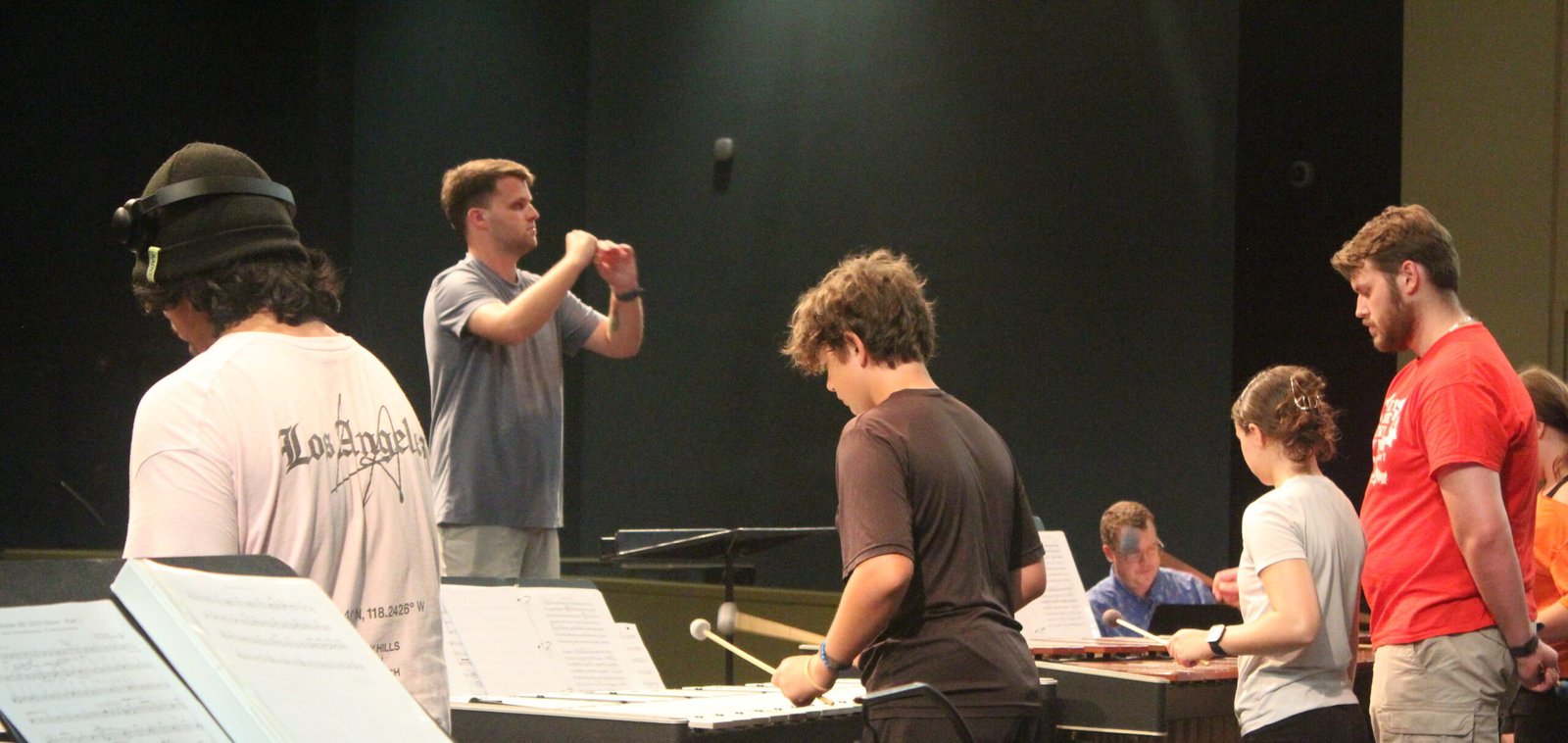
Before teaching a local band camp, I would practice inefficiently, constantly reiterating that I need more reps, I need more time, etc. in a way that was just like slamming my head against a wall. I created excuses for failure. After teaching, on the other hand, I realized that my voice became softer; I began talking to myself with the patience and temperament that I gave my middle and high school students.
I actually made more progress this way. I broke down the challenges into smaller segments, treating myself the same way I would treat a student learning her B-flat scale. Learning isn’t that different from her to me: it’s all just relative difficulty.
Realizing this, I know that I can teach anyone. If I can show them how to learn, they can.
Making the World Better than I Found It
All of this would be for nothing if it made no difference in the world.
As I stated in the beginning of this article, we generally view the world as this objective place where things happen and don’t, but that’s not how we experience it. “Good” and “bad” will differ based on who you ask. I could see finding a couple quarters on the ground as good luck, while someone else sees them sitting on the ground and thinks it’s bad I picked it up because it’s dirty.
All this to say: if you positively affect one student, that’s enough. You’ve made the world much better than you found it. You’ve made it better for not only that person, but every person that they go out and positively affect too. Imagine that across a lifetime and you bet the world will be better.
The world is constructed of the relationships we create. It isn’t a fixed place; it’s always changing. We can’t see the overarching purpose; we can only make it shine a little brighter for every person we meet.
Give your students the benefit of the doubt––they’re being challenged to do something they’ve never done before, and so are you. At the end of the day, we’re all students and the world could do with a little less pressure on everybody all the time. Show patience, show empowerment, and show that education matters.